


Confidence and self-esteem are closely connected, but they are not the same thing. Together, they shape how you see yourself and how you show up in the world.
About Self-Esteem
Self-esteem is the way you value, respect, and feel about yourself. It reflects how much you believe you are capable, worthy, and deserving of respect—both from others and from yourself.
At its core, self-esteem shapes how you think, feel, and act in daily life. People with healthy self-esteem tend to feel confident and resilient, while low self-esteem can make everyday challenges feel heavier.
| Aspect | Explanation |
| Meaning of Self-Esteem | How a person values, respects, and feels about themselves |
| Core Components | Self-worth, self-confidence, self-respect, self-acceptance |
| Why It Matters | Affects mental health, relationships, and decision-making |
| High Self-Esteem | Confidence, resilience, positive self-image |
| Low Self-Esteem | Self-doubt, fear of failure, negative self-talk |
| Influencing Factors | Family, upbringing, experiences, social environment |
| Role in Mental Health | Supports emotional balance and stress management |
| Impact on Relationships | Encourages healthy boundaries and communication |
| Connection to Success | Improves motivation, goal-setting, and persistence |
| Can It Change? | Yes—self-esteem can improve over time with effort |
| Ways to Build It | Positive self-talk, self-care, learning new skills |
| Everyday Example | Feeling proud of achievements and accepting mistakes |
What Self-Esteem Includes
Self-esteem is made up of several connected parts that shape how you see and treat yourself:
- Self-Worth
Believing that you are valuable and deserving of respect, regardless of success or failure. - Self-Confidence
Trust in your abilities, skills, and judgment when facing tasks or challenges. - Self-Respect
Treating yourself with care, setting healthy boundaries, and not accepting mistreatment. - Self-Acceptance
Accepting both strengths and weaknesses without excessive self-criticism. - Positive Self-Image
Having a balanced view of yourself, including appearance, abilities, and personality. - Sense of Competence
Feeling capable of handling responsibilities and solving problems. - Emotional Resilience
The ability to cope with criticism, failure, and setbacks without losing self-belief.
Why Self-Esteem Is Important
Self-esteem plays a major role in how we think, feel, and act in everyday life. Here’s why it truly matters:
- Supports Mental Health
Healthy self-esteem helps reduce stress, anxiety, and depression by building emotional balance. - Builds Confidence
It allows you to trust your abilities and face challenges without constant self-doubt. - Improves Decision-Making
When you value yourself, you make choices that protect your well-being and future. - Strengthens Relationships
Good self-esteem encourages healthy boundaries, mutual respect, and clear communication. - Increases Motivation & Success
People with strong self-esteem are more likely to set goals and persist despite setbacks. - Helps Handle Failure
It allows you to see mistakes as learning opportunities rather than personal flaws. - Encourages Self-Respect
You’re less likely to tolerate negativity, abuse, or unhealthy situations. - Promotes Independence
You rely less on approval from others and more on your own values.
What Is Confidence?
Confidence is the belief in your ability to do something successfully. It’s the feeling that “I can handle this”—whether it’s speaking in public, learning a new skill, or making a decision.
| Aspect | Description |
| Meaning | Confidence is the belief in your ability to perform a task or handle a situation successfully |
| Focus | Skills, abilities, and actions |
| Nature | Can change depending on experience and situation |
| Source | Practice, learning, preparation, and past success |
| Area-based | You can be confident in one area and not in another |
| Impact | Helps you take action, make decisions, and face challenges |
| Effect of Failure | May decrease temporarily but can be rebuilt |
| Example | Speaking confidently in public or solving a problem independently |
Examples of Confidence
Here are some clear, everyday examples that show what confidence looks like in real life:
In Studies & Learning
- Answering questions in class without fear
- Taking exams calmly and focusing on solutions
- Asking doubts when you don’t understand something
At Work
- Sharing ideas in meetings
- Taking responsibility for a task or project
- Handling feedback positively
In Communication
- Speaking clearly and maintaining eye contact
- Expressing opinions respectfully
- Saying “no” when needed without guilt
In Personal Life
- Trying a new skill or hobby
- Making decisions independently
- Facing challenges instead of avoiding them
Emotional Confidence
- Accepting mistakes and learning from them
- Staying calm under pressure
- Believing you can improve with effort
Difference between of Self-Confidence and Self-Esteem
| Feature | Self-Confidence | Self-Esteem |
| Meaning | Belief in your skills and skills | Assurance in your self-respect |
| Focus | I can do this | “I am respected.” |
| Based On | Presentation and skill | Self-receipt and self-respect |
| Nature | Situation-based | More steady and long-lasting |
| Changes With | Success and failure | Internal attitude |
| Example | Sureness in charitable a speech | Sensation-worth smooth after disappointment |
| Development | Grows with practice | Grows with self-love |
| Effect on Life | Improves performance | Improves emotional health |
| Reaction to Failure | May decrease | Remains balanced |
| Main Role | Helps you take action | Helps you feel secure |
Understanding Self-Esteem and Confidence
Formerly headlong into how to improve your sureness, it’s essential to understand the difference between confidence and self-esteem. Self-esteem refers to how you feel about yourself as a person. It’s an inherent sense of worth that affects how you view your aptitudes, your arrival, and your place in the world. Confidence, on the other hand, is more outward-facing and focused on how you feel in specific conditions or when relating with others.
A combination of internal beliefs and external involvements shapes both confidence and self-esteem. For example, a lack of confidence may arise from a negative body image or uncertainty about your skills. On the flip side, sureness can be increased by feats, respect, and even how you present by hand.
Self-Confidence and Self-Esteem Quotes
| No. | Quote | Meaning |
| 1 | “Believe in yourself, even when no one else does.” | Trust your own abilities. |
| 2 | “You are stronger than you think.” | You have hidden strength. |
| 3 | “Your value does not depend on others’ opinions.” | Self-worth comes from within. |
| 4 | “Confidence grows when you face your fears.” | Courage builds belief |
| 5 | “Be proud of how far you have come.” | Appreciate your progress |
| 6 | “You are enough, just as you are.” | Accept yourself |
| 7 | “Don’t let doubt stop your dreams.” | Keep moving forward |
| 8 | “Respect yourself first.” | Self-respect builds esteem |
| 9 | “Small steps create big confidence.” | Progress matters |
| 10 | “Love yourself before expecting it from others.” | Self-love is important |
Can you Have Confidence But low Self-Esteem?
| Aspect | Confidence (Outside) | Low Self-Esteem (Inside) | Result |
| Behavior | Looks bold and sure | Feels insecure | Mixed personality |
| Speaking | Talks confidently | Fears judgment | Hides true feelings |
| Work Performance | Performs well | Doubts self-worth | Feels pressure |
| Reaction to Praise | Accepts praise | Doesn’t believe it | Feels uncomfortable |
| Reaction to Criticism | Acts calm | Feels deeply hurt | Loses motivation |
| Self-Image | Appears strong | Feels “not good enough.” | Low inner peace |
| Decision Making | Takes action | Fears mistakes | Overthinks |
| Relationships | Seems confident | Needs validation | Emotional dependence |
| Motivation | Driven to succeed | Afraid of failure | Stress increases |
| Happiness | Shows confidence | Feels empty inside | Less satisfaction |
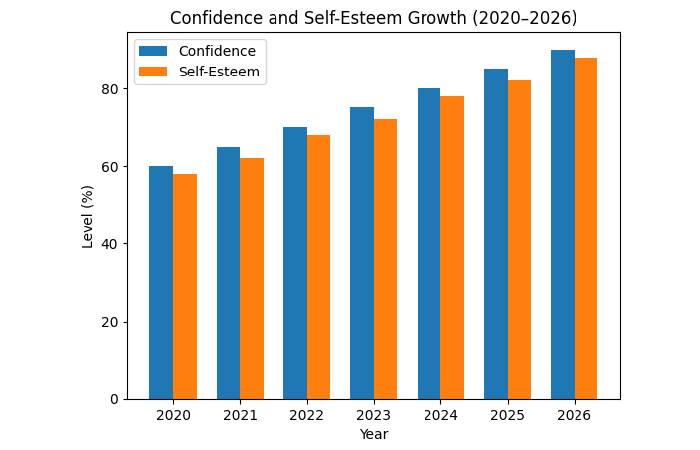
Confidence and Self-Esteem Bar Graph (2020-2026)Year
Association Between Confidence and Self-Esteem
Here is the Association Between Confidence and Self-Esteem in table form:
| Aspect | Confidence | Self-Esteem | Relationship |
| Meaning | Belief in your abilities | Belief in your self-worth | Both affect how you see yourself |
| Focus | “I can do this.” | “I am valuable.” | Work together for personal growth. |
| Source | Skills and experience | Inner feelings and self-acceptance | One supports the other |
| Stability | Changes with situations | More stable over time | Self-esteem helps confidence stay strong |
| Impact | Helps in performance | Helps in emotional health | Balanced growth improves life |
| Reaction to Failure | May decrease after failure | Stays strong if healthy | Good self-esteem protects confidence |
| Social Life | Improves communication | Builds self-respect | Together, create healthy relationships |
| Motivation | Pushes you to try | Helps you stay positive | Both increase motivation |
| Decision Making | Encourages action | Builds self-trust | Helps make better choices |
| Personal Growth | Develops through practice | Develops through self-love | Both grow with experience |
Improving Your Physical Confidence
Physical influx can significantly influence how we feel about ourselves. However, true sureness comes from within; there’s no denying that feeling good about how you look can positively impact your confidence. Taking steps to recover your physical health and your energy can be an effective way to boost your confidence.
- Adopt a healthy lifestyle: Regular exercise, a balanced diet, and adequate sleep not only benefit your body but also your mind. Exercise releases endorphins, the “feel-good” hormones that advance your mood and energy levels. A healthy diet and good sleep contribute to glowing skin, better focus, and overall well-being.
- Dress to fast your personality: Wearing garments that make you feel comfortable and confident can have a dramatic impact on your self-esteem. Whether it’s your favourite outfit or a new haircut, finding ways to fast yourself through your appearance can help you feel more in control and self-assured.
- Consider professional cosmetic procedures: For some individuals, cosmetic procedures can boost confidence. Whether it’s correcting a physical eye that has caused years of discomfort or enhancing your natural beauty, procedures achieved by qualified specialists can help you achieve a look that makes you feel your best.
Seeking advice from a cosmetic surgeon in Sydney offers a chance to explore safe, custom-made options to help you look and feel like the best version of yourself. It’s significant to remember that these actions should be about personal satisfaction, not about conforming to societal ideals.
Futures of Confidence and Self-Esteem
| Area of Life | Role in the Future | How It Helps | Long-Term Benefit |
| Career | Improves job performance | Helps speak up and take chances | Better growth and promotions |
| Education | Builds learning ability | Reduces fear of failure | Higher success rate |
| Relationships | Creates healthy bonds | Improves communication | Strong social life |
| Mental Health | Reduces stress and anxiety | Builds emotional strength | Peaceful mindset |
| Leadership | Develops leadership skills | Builds trust in others | More influence and respect |
| Decision Making | Improves choices | Less self-doubt | Better life direction |
| Financial Growth | Encourages smart risks | Boosts business confidence | Stable income |
| Personal Growth | Supports self-improvement | Motivates learning | Lifelong development |
| Social Life | Improves social skills | Reduces shyness | Wider network |
| Life Satisfaction | Increases happiness | Builds self-worth | Meaningful life |
Mental Health and Confidence
Your mental well-being is closely related to your confidence and self-esteem. Speaking issues like anxiety, depression, or stress can have an influential impact on how you see yourself. While it’s normal to have days when you feel less self-assured, tenacious low confidence can touch your mental health. Here are some ways to provision your mental wellness:
- Prioritise self-care: Taking time for self-care is essential for maintaining your mental health. This could mean engaging in activities that relax you, such as reading, meditation, or spending time in nature. It’s essential to carve out time for yourself to recharge and reflect.
- Seek professional support: If feelings of low self-worth are impacting your daily life, it may be helpful to seek support from a counsellor or therapist. Therapy can help you identify negative thought patterns and work through issues that may be causal to low self-esteem.
- Surround yourself with positivity: The people you spend time with can significantly affect your self-esteem. Surround yourself with supportive, hopeful individuals who uplift you and make you feel good about yourself. It’s also important to limit exposure to toxic relations or environments that cause you to feel negative about yourself.
The Power of Positive Social Connections
Humans are social creatures, and the connections we form with others can profoundly influence our self-esteem. Positive social interactions can boost confidence, while isolation or negative relations can have the opposite effect. To improve your social confidence and foster meaningful connections:
- Practice active listening: In chats, focus on truly listening to the other person. This not only helps you connect more deeply but also improves your message skills, boosting your confidence in social settings.
- Join groups or clubs: Whether it’s a hobby, sport, or professional group, connecting with a community of like-minded individuals can help you build influences and feel more confident in your social interactions.
- Step out of your comfort zone: Building confidence often means stepping outside it. Take small steps to engage in activities that challenge you, whether it’s speaking up in a meeting or attending a social event alone. Each time you face a fear and overcome it, you build resilience and confidence.
Confidence and Self-Esteem prices of India, the UK, and London
Here’s an overview of typical prices for confidence and self-esteem courses, workshops, or coaching available in India, the UK, the USA, and London — presented in a simple table format:
| Region | Type of Program | Typical Price Range | Notes |
| India | Online self-confidence course | ₹499 (~₹588 incl. GST) | Short self-paced online course example |
| India | 4-week Confidence Building Course | ₹1,000 approx | Certification + lifetime access (example) |
| India | In-person or workshop courses | Varies (enquiry required) | Many local providers don’t list fixed prices online; ask directly |
| UK | Basic online confidence/self-esteem course | £20–£25 | Short online training examples |
| UK | Self-esteem coaching certificate | £90–£140 | Longer self-esteem coaching qualification |
| UK | Assertiveness & Confidence Training (1-day) | ~£195–£395 | In-person course examples |
| London | Online workshop or event | £3.99–£10.99 | Low-cost online event price example |
| UK (general) | Confidence coaching sessions | £50–£250 per session | 1:1 coaching in the UK range |
| USA | Online confidence/self-esteem course | ~$199–$249 | Example from global course platforms (USD pricing) |
| USA | Personal confidence coach | Varies widely | Professional coaches often charge per session; typical marketplace rates are not listed here. |
Embracing Change and Personal Growth
Life is a trip, and sureness and confidence are built through personal growth and change. Embracing new experiences, learning from setbacks, and being unceasingly focused on yourself are all part of creating a robust sense of confidence.
- Study from letdowns: Everyone knows failure, but it’s how you respond that shapes your sureness. Instead of viewing failures as personal flaws, see them as learning opportunities. Each setback offers valuable lessons that can help you grow and improve.
- Party your growth: Confidence doesn’t happen overnight, but recognising and celebrating your progress can keep you motivated. Whether it’s a personal achievement or overcoming a test, take time to remember how far you’ve come on your journey.
- Stay exposed to new knowledge: Confidence grows when you take on new challenges and expand your horizons. Whether it’s travelling, taking up a new hobby, or knowledge a new skill, embracing change helps you build resilience and confidence in your abilities.
Final
Confidence and sureness are the foundation of a happy and fruitful life. Self-assurance helps you face challenges, while self-esteem enables you to value yourself. When both grow calm, you become expressively intense and mentally nonviolent. True sureness does not mean being perfect. It means trusting yourself even when you make mistakes, having healthy self-esteem and income, and loving and caring for yourself without comparing yourself to others.
FAQS
What is self-esteem?
It is how much you value and respect yourself.
What is confidence?
It is believing in your abilities and skills.
Can confidence be improved?
Yes, it grows with practice and experience.
Can low self-esteem affect life?
Yes, it can reduce happiness and motivation.
Are confidence and self-esteem the same?
No, they are related but different.
How can I build self-esteem?
By accepting yourself and thinking positively.
How can I become more confident?
By learning new skills and facing fears.
Does failure reduce confidence?
Sometimes, but it also helps you learn.
Is self-love important?
Yes, it builds strong self-esteem.
Can anyone become confident?
Yes, with effort and patience.