

Sleep is a natural need for rest in which the body and mind rest and recover. It is characterized by increased activity, reduced awareness of surroundings, and slowed physical functions.
During sleep, significant processes such as tissue repair, memory consolidation, and hormone regulation occur. Passable sleep is essential for upholding overall physical health, mental well-being, and daily performance.
5 Surprising Things That Can Disrupt Your Sleep
Many sleep problems are caused by everyday habits you might not notice. Here’s a detailed explanation of five surprising factors:
- Blue Light from Screens
Modern devices like phones, tablets, and TVs emit blue light, which interferes with your body’s natural sleep cycle.
- How it disrupts sleep:
Blue light suppresses melatonin (the sleep hormone), tricking your brain into thinking it’s still daytime. - Effects:
Difficulty falling asleep, poor sleep quality - What to do:
Avoid screens 1 hour before bed or use night mode
- Late Caffeine Intake
Caffeine is a stimulant found in coffee, tea, chocolate, and energy drinks.
- How it disrupts sleep:
It blocks adenosine, a chemical that promotes sleep - Effects:
Restlessness, delayed sleep, lighter sleep - What to do:
Avoid caffeine at least 6–8 hours before bedtime
- Stress and Overthinking
Mental stress and anxiety are major hidden causes of sleep disturbance.
- How it disrupts sleep:
Keeps the brain active when it should relax - Effects:
Trouble falling asleep, frequent waking, linked to Insomnia - What to do:
Practice relaxation techniques like meditation or deep breathing
- Eating Heavy or Late Meals
Eating too much or too late at night can affect digestion and sleep.
- How it disrupts sleep:
Causes discomfort and acid reflux when lying down - Effects:
Interrupted sleep, burning sensation, uneasiness - What to do:
Finish meals 2–3 hours before bedtime and keep them light
- Room Temperature and Environment
Your sleeping environment plays a bigger role than you might think.
- How it disrupts sleep:
Extreme temperatures prevent the body from relaxing - Effects:
Frequent waking, shallow sleep - What to do:
Keep your room cool, quiet, and dark
Common Causes of Sleep Disruption
| Cause | Description | Effect on Sleep |
| Screen Time (Blue Light) | Use of phones, TVs, or laptops before bed | Reduces melatonin, delays sleep |
| Caffeine Intake | Coffee, tea, or energy drinks taken late | Keeps brain alert, prevents sleep |
| Stress & Anxiety | Overthinking, worry, or tension | Difficulty falling asleep, linked to Insomnia |
| Heavy or Late Meals | Eating large or spicy meals at night | Causes discomfort and disturbed sleep |
| Room Temperature | Too hot or too cold environment | Frequent waking, poor sleep quality |
| Noise & Light | Loud sounds or bright lights in the room | Interrupts deep sleep |
| Irregular Sleep Schedule | Sleeping at different times daily | Disturbs body clock (circadian rhythm) |
| Lack of Physical Activity | Little or no exercise | Makes it harder to fall asleep |
Importance of Sleep for Overall Health
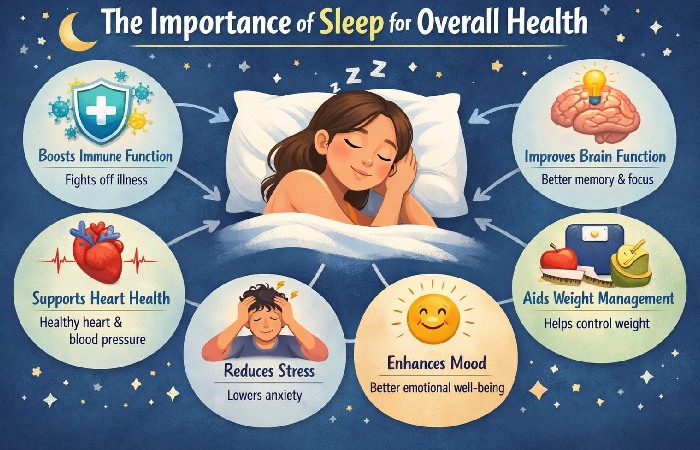
Sleep is essential for maintaining physical health, supporting immune function, and allowing the body to repair and recover. It also plays a crucial role in brain function, including memory, concentration, and emotional balance.
| Aspect | Importance | Impact on Health |
| Physical Health | Supports body repair and growth | Lessens the risk of chronic diseases |
| Mental Health | Enhances mood and emotional stability | Lowers stress and anxiety |
| Immune System | Strengthens defense against infections | Helps fight illnesses effectively |
| Brain Function | Recovers memory and focus | Boosts productivity and learning |
| Heart Health | Regulates blood pressure and heart function | Decreases the risk of heart disease |
| Weight Management | Equilibria hunger hormones | Prevents overeating and obesity |
Benefits of Quality Sleep
Quality sleep is essential for overall health, as it supports physical recovery, brain function, and emotional balance. It helps improve concentration, boost immunity, and enhance daily performance and energy levels.
Improved Physical Health
Receiving sufficient quality sleep allows the body to repair tissues, control hormones, and strengthen the immune system, thereby reducing.
Better Mental Well-being
Passable sleep supports brain function, improves nostalgia, and helps manage pressure, anxiety, and mood swings efficiently.
Enhanced Productivity and Focus
Well-rested attention leads to better concentration, decision-making, and efficiency in daily tasks, whether at work or at school.
Stronger Immune System
Fineness sleep boosts the body’s natural defense system, serving to fight infections and recover faster from diseases.
Healthy Weight Management
Good sleep helps control starvation hormones, reduces cravings, and helps avert overeating, all of which are key to maintaining a healthy weight.
Common Sleep Disorders and Their Effects
Sleep illnesses can disrupt usual sleep patterns, leading to poor rest and impaired daily functioning. If raw, they may touch physical health, mental well-being, and overall quality of life.
| Sleep Disorder | Description | Effects on Health |
| Insomnia | Difficulty falling or staying asleep | Fatigue, irritability, poor concentration |
| Sleep Apnea | Interrupted breathing during sleep | Daylight sleepiness, heart problems |
| Restless Legs Syndrome | Urge to move legs while resting | Uneasiness, disturbed sleep |
| Narcolepsy | Sudden sleep attacks during the day | Loss of alertness, safety risks |
| Sleepwalking | Walking or performing activities while asleep | Injury risk, disrupted sleep |
| Night Terrors | Penetrating fear episodes during sleep | Nervousness, disturbed rest |
Get a Good Night’s Sleep
To get a good night’s sleep, don’t just close your eyes and hope for the best. It’s important to create the right habits and environment. Pay attention to your sleep routine and your daily activities, and then make small changes that will give you a more restful sleep. You can also determine how much sleep you need by using a sleep calculator. This can give you an idea of when you should wake up, when you should go to sleep, and how many hours are ideal for your age and body type.
| Tip | Description | Benefit |
| Maintain a Sleep Schedule | Go to bed and wake up at the same time daily | Regulates your body clock |
| Create a Relaxing Bedtime Routine | Read, meditate, or take a warm bath | Helps signal your body to wind down |
| Limit Screen Time | Avoid phones and TVs before bed | Reduces blue light exposure and improves sleep quality |
| Optimize Sleep Environment | Keep your room dark, cool, and quiet | Promotes deeper, uninterrupted sleep |
| Watch Your Diet | Avoid caffeine and heavy meals at night | Prevents sleep disturbances |
| Stay Physically Active | Exercise regularly, but not right before bed | Improves sleep duration and quality |
| Manage Stress | Practice relaxation techniques like deep breathing | Reduces anxiety and promotes calmness |
| Limit Daytime Naps | Keep naps short and early in the day | Prevents disruption of nighttime |
Tips for Improving Sleep Quality
Improving sleep quality involves adopting healthy habits that support a reliable, restful, monotonous sleep. Small lifestyle vicissitudes can make a big difference in how quickly you fall asleep and how refreshed you feel.
Maintain a Consistent Sleep Schedule
Going to bed and waking up at the same time every day helps order your internal body clock, making it easier to fall asleep and wake up on time.
Create a Comfortable Sleep Environment
Guarantee your bedroom is quiet, dark, and cool, with a comfortable mattress and pillows that promote continuous, deep sleep.
Limit Screen Time Before Bed
Avoid using phones, processors, or watching TV at least an hour before bedtime, as blue light can interfere with the body’s natural sleep signals.
Watch Your Diet and Caffeine Intake
Decrease caffeine, nicotine, and heavy meals in the twilight, as they can disrupt your ability to fall and stay asleep.
Stay Physically Active
Regular exercise can help you fall numb faster and enjoy a deeper sleep, but try to avoid intense tests close to your bedtime.
Manage Stress and Relax
Active relaxation practices such as deep breathing, mindfulness, or reading can calm your mind and prepare your body for soothing sleep.
Impact of Sleep on Mental Health
Sleep plays a vital role in maintaining mental health by supporting secondary expressive balance, cognitive function, and stress regulation. Poor sleep can lead to mood swings, augmented anxiety, difficulty concentrating, and a higher risk of mental health illnesses.
| Sleep Factor | Effect on Mental Health | Outcome |
| Adequate Sleep | Steadies mood and emotions | Improved mental well-being |
| Sleep Deprivation | Increases stress and irritability | Higher risk of anxiety and unhappiness |
| REM Sleep | Supports memory and emotional processing | Better knowledge and coping skills |
| Irregular Sleep Patterns | Disrupts brain function | Reduced focus and productivity |
| Deep Sleep | Indorses mental recovery | Enhanced clarity and decision-making |
| Long-lasting Sleep Issues | Linked to mental disorders | Long-term mental impact |
Sleep Cycle and Stages Explained
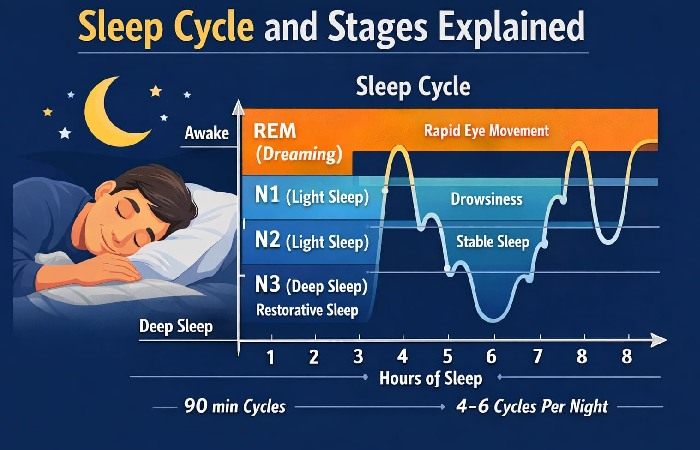
The sleep cycle is a repetitive pattern your body goes through during the night, typically lasting about 90 minutes and occurring several times. It contains different stages that help restore energy, support brain function, and promote overall health.
Stage 1: Light Sleep
This is the transition phase between wakefulness and sleep. The body begins to relax, and intellectual activity slows, making it calmer to wake up.
Stage 2: Deeper Light Sleep
In this stage, heart rate and breathing become more even, and body temperature drops. It cooks the body for profounder sleep.
Stage 3: Deep Sleep
Also known as slow-wave sleep, this stage is essential for physical recovery, tissue repair, and immune system function. Waking up during this stage can make you feel groggy.
REM Sleep (Rapid Eye Movement)
This stage is related to vivid dreams and increased brain activity. It plays a key role in nostalgia, alliance formation, learning, and emotional regulation.
Role of Diet and Exercise in Sleep Quality
A balanced diet and regular exercise play a key role in refining sleep quality by regulating body functions and reducing stress levels. Healthy lifestyle habits can help you fall asleep more quickly and enjoy deeper, more healing sleep.
| Factor | Description | Impact on Sleep |
| Balanced Diet | Includes nutrients like magnesium and vitamins | Promotes relaxation and better sleep |
| Avoiding Caffeine | Limiting coffee, tea, and energy drinks | Prevents sleep disturbances |
| Light Evening Meals | Eating smaller meals before bedtime | Reduces uneasiness and improves sleep |
| Regular Exercise | Engaging in daily physical activity | Helps fall asleep faster and sleep more deeply |
| Timing of Exercise | Avoiding intense workouts late at night | Prevents overstimulation before bed |
| Hydration | Eating enough water throughout the day | Ropes overall body balance and rest |
Effects of Sleep Deprivation
Sleep deprivation can negatively affect both physical and mental health, plummeting overall quality of life and daily functioning.
| Effect | Description | Impact |
| Fatigue | Constant tiredness and low energy levels | Reduced productivity and motivation |
| Poor Concentration | Difficulty focusing and remembering information | Increased mistakes and lower efficiency |
| Mood Changes | Irritability, stress, and anxiety | Strained relationships and emotional imbalance |
| Weakened Immune System | Abridged ability to fight infections | Higher risk of illness |
| Heart Health Issues | Increased blood pressure and strain on the heart | Greater risk of circulatory diseases |
| Weight Gain | Disturbance of hunger hormones | Increased cravings and overeating |
| Reduced Reaction Time | Slower responses and alertness | Higher risk of accidents |
| Mental Health Problems | Increased risk of unhappiness and anxiety | Long-term psychological effects |
Conclusion
Sleep is an important part of a healthy lifestyle, essential for both physical and mental well-being. Prioritizing good sleep habits can improve overall health, boost productivity, and improve quality of life. By maintaining a consistent routine, handling stress, and engaging in a healthy diet and exercise, people can achieve healthier sleep and long-term wellness.