

Post-operative rehabilitation is the process of recovery and therapy after a surgery to help a patient regain strength, mobility, function, and independence.
Rehabilitation after hand surgery is a crucial step in regaining strength, flexibility, and function. Whether you’ve undergone a minor procedure or a more complex reconstruction, post-operative care and therapy can make all the difference in achieving a full recovery. With a tailored rehabilitation plan, patience, and commitment, you can restore your grip and get back to your daily activities.
If you’ve opted for hand surgery, you’re already on the path to receiving expert care. Now, it’s time to focus on the recovery process and understand how rehabilitation plays a key role in restoring your hand’s function and strength.
This guide explores the importance of post-operative rehabilitation, the techniques used, and practical tips to help you regain mobility and independence.
What is Rehabilitation?
Rehabilitation is the process of helping a person recover and regain their physical, mental, or social abilities after an illness, injury, surgery, or addiction. It aims to restore normal functioning and improve independence in daily life through therapies, exercises, and medical support. Rehabilitation may include physical therapy, counseling, occupational training, and other treatments, depending on the person’s condition.
Types of Rehabilitation
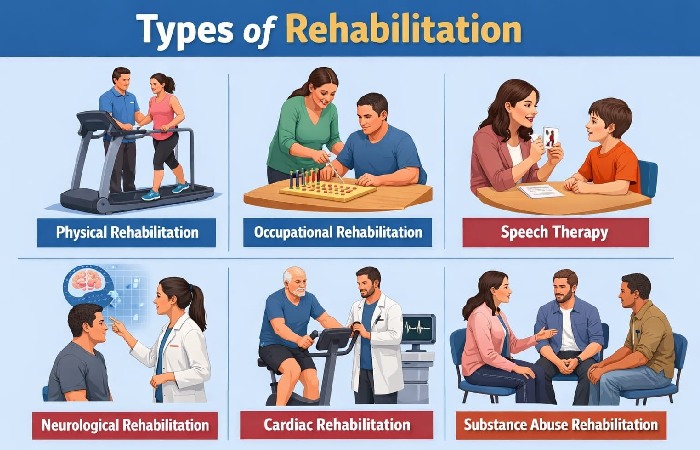
Rehabilitation can be branded into different types based on the needs of recovery, focusing on refining physical health, mental well-being, daily functioning, and overcoming addictions. Each type plays a vital role in helping individuals regain independence and return to a normal lifestyle.
| Type of Rehabilitation | Description |
| Physical Rehabilitation | Helps reinstate movement, strength, and physical function after injury or illness. |
| Mental Health Rehabilitation | Supports recovery from mental health circumstances through therapy. |
| Occupational Rehabilitation | Assists persons in regaining skills needed to return to work or daily tasks. |
| Substance Abuse Reintegration | Helps individuals overcome addiction to drugs or alcohol through organized programs. |
What are the 4 Stages of Rehabilitation?
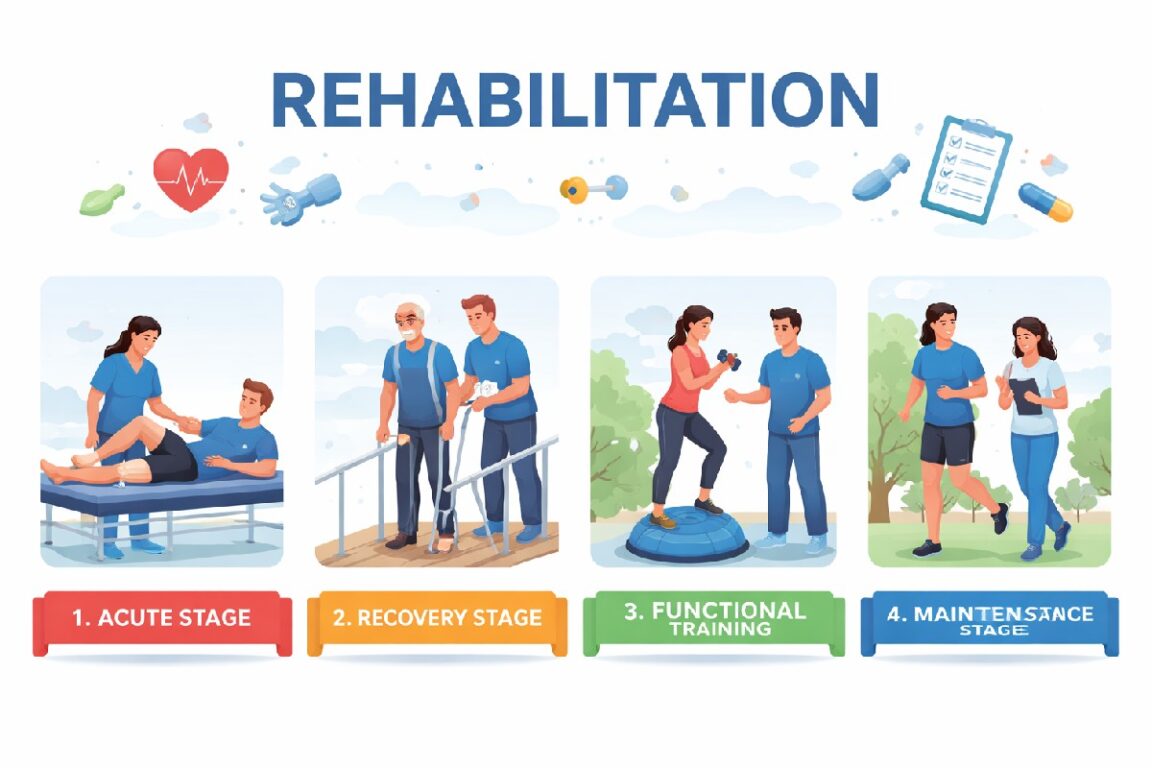
The four stages of rehabilitation represent a structured process that helps persons recover step by step after an injury, illness, or surgery. It starts with the acute stage, focused on reducing pain and preventing further damage, followed by the recovery stage, which focuses on restoring basic movement and strength.
1. Acute Stage (Immediate Care):
This stage begins right after injury, illness, or surgery. The main emphasis is on reducing pain, controlling swelling, and preventing
2. Recovery Stage:
In this stage, the enduring starts to retrieve basic movement and strength through guided exercises and therapy.
3. Functional Training Stage:
The focus is on restoring normal daily activities, such as walking, lifting, and returning to work, with healthier strength and organization.
4. Return to Activity Stage:
The final stage helps the person safely return to full physical activity, sports, or a normal lifestyle with a reduced risk of reinjury.
What is Post-Operative Rehabilitation?
Post-operative rehabilitation is the care and treatment a person receives after surgery to help them recover properly and return to normal activities.
Components of Post-Operative Rehabilitation
| Component | Description | Example |
| Physiotherapy | Exercises to restore movement, strength, and flexibility | Range of Motion Exercises |
| Pain Management | Methods to reduce pain and discomfort after surgery | Medicines like Ibuprofen, ice therapy |
| Wound Care | Cleaning and protecting the surgical area to prevent infection | Dressing changes, hygiene |
| Mobility Training | Helping the patient move safely and gradually increase activity | Walking with support (walker, crutches) |
| Nutrition Support | Proper diet to promote healing and recovery | High-protein foods, vitamins |
| Patient Education | Teaching the patient how to care for themselves after surgery | Do’s & don’ts, home care instructions |
| Monitoring & Follow-up | Regular check-ups to track recovery progress | Doctor visits, progress evaluation |
Importance of Post-Operative Rehabilitation
Post-operative rehabilitation is very important because it ensures a safe, faster, and complete recovery after surgery.
Key Importance
Faster Recovery
- Helps the body heal more quickly
- Reduces hospital stay and recovery time
Restores Movement & Function
- Brings back normal body movements
- Uses exercises like Range of Motion Exercises to improve flexibility
Reduces Pain and Swelling
- Proper care and medicines (e.g., Ibuprofen) help control pain
- Prevents discomfort during recovery
Prevents Complications
- Avoids problems like:
- Joint stiffness
- Muscle weakness
- Blood clots
- Infections
Improves Strength and Independence
- Helps patients regain muscle strength
- Enables return to daily activities without support
Enhances Overall Quality of Life
- Helps patients return to work, school, or normal life
- Builds confidence and mental well-being
Rehabilitation Techniques
| Technique | Description | Example |
| Exercise Therapy | Improves strength, flexibility, and movement | Range of Motion Exercises, strengthening exercises |
| Manual Therapy | Hands-on techniques to reduce pain and improve mobility | Massage, joint mobilization |
| Electrotherapy | Uses electrical energy to reduce pain and promote healing | TENS (Transcutaneous Electrical Nerve Stimulation) |
| Heat & Cold Therapy | Controls pain and swelling | Ice packs, hot packs |
| Breathing Exercises | Improves lung function, especially after chest/abdominal surgery | Deep breathing exercises |
| Gait Training | Helps patients walk safely after surgery | Walking with crutches or walker |
| Hydrotherapy | Exercises performed in water to reduce stress on joints | Pool therapy |
| Occupational Therapy | Helps perform daily activities independently | Dressing, eating, bathing training |
| Assistive Devices Training | Learning to use support devices safely | Wheelchair, cane, walker |
Practical Tips for Post-Operative Rehabilitation
Here are simple and effective tips to ensure a smooth recovery after surgery:
| Tip | What to Do | Why It’s Important |
| Follow Doctor’s Advice | Take medicines on time and attend follow-ups | Ensures safe and proper healing |
| Do Regular Exercises | Perform prescribed exercises like Range of Motion Exercises | Prevents stiffness and improves movement |
| Manage Pain Properly | Use medicines (e.g., Ibuprofen) and rest | Keeps you comfortable and active |
| Keep Wound Clean | Change dressings and maintain hygiene | Prevents infection |
| Eat Healthy Food | Take protein-rich diet, fruits, and vegetables | Speeds up healing |
| Stay Hydrated | Drink enough water daily | Helps recovery and prevents weakness |
| Move Gradually | Start with light activity and increase slowly | Avoids injury and strain |
| Use Support Devices | Use walker, crutches if advised | Prevents falls and supports mobility |
| Get Enough Rest | Sleep well and avoid overexertion | Helps body repair itself |
| Watch for Warning Signs | Look for swelling, fever, or unusual pain | Early detection of complications |
Prices in India, the UK, the USA, and London for Rehabilitation
The cost of rehabilitation varies extensively by country, treatment type, and whether it is short-term therapy or long-term care. Issues such as location, facility quality, and medical specialization also affect the overall cost of rehabilitation services.
| Country | Average Cost of Rehabilitation (Approx.) |
| India | ₹500 – ₹1,500 per session; long-term programs ₹15,000 – ₹40,000 |
| UK | £60 – £200 per session, depending on clinic and treatment type |
| USA | $75 – $200 per session (can go higher with advanced care) |
| London (UK) | £80 – £150 per session due to higher living costs |
Goals of Rehabilitation Programs
Rehabilitation programs are designed to help persons recover effectively and regain their individuality after illness, injury, or surgery. These programs focus on improving the overall quality of life by addressing the physical, mental, and social aspects of recapturing.
Restore Physical Function
The primary goal is to improve strength, mobility, and suppleness so individuals can perform daily actions with ease and self-assurance.
Promote Independence
Rehabilitation helps individuals become self-reliant by enhancing their ability to manage personal and routine tasks without help.
Reduce Pain and Discomfort
Through targeted treatments and rehabilitation, the aim is to minimize pain and prevent further problems.
Improve Mental Well-being
Programs also focus on emotional support, reducing stress, anxiety, and depression during the recovery process.
Prevent Future Injuries
Rehabilitation teaches individuals proper techniques and lifestyle changes to avoid re-injury or relapse.
Enhance Quality of Life
Overall, the goal is to help people return to a healthier, more active, and fulfilling life.
The Importance of Commitment to Rehabilitation
Commitment to rehabilitation is essential for achieving successful, long-lasting recovery. It safeguards consistency, motivation, and active contribution in therapies, leading to better physical, mental, and expressive outcomes.
| Aspect of Commitment | Importance |
| Consistency | Regular participation helps hasten recovery and prevents setbacks. |
| Motivation | Staying absorbed improves sureness and overall progress. |
| Discipline | Following routines and therapy plans leads to effective results. |
| Positive Mindset | Encourages pliability and helps overcome challenges during recovery. |
| Long-term Success | Strong promise reduces the risk of deterioration or re-injury. |
Benefits of Rehabilitation Therapy
Rehabilitation therapy plays a crucial role in helping individuals recover from injuries, illnesses, or surgeries by improving their physical, mental, and emotional well-being. It improves independence and promotes a faster, safer return to daily life.
Key Benefits:
Improves strength, mobility, and overall physical function
Reduces pain and stops further complications
Restores independence in daily activities
Enhances mental health and emotional stability
Speeds up recovery and endorses long-term wellness
Helps avert re-injury or relapse
Improves the superiority of life and confidence
Physical and Mental Rehabilitation
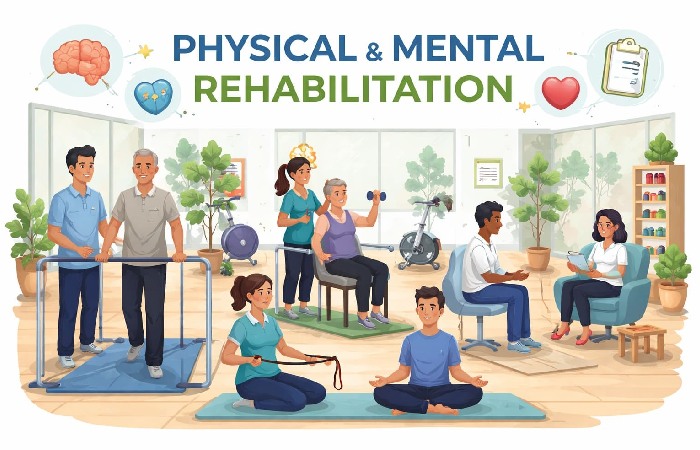
Physical and mental rehabilitation focus on different features of recovery, but are similarly important for overall well-being. While physical rehabilitation improves body function and flexibility, mental rehabilitation supports expressive and psychological recovery.
| Aspect | Physical Rehabilitation | Mental Rehabilitation |
| Focus | Body strength, movement, and physical remedial | Emotional, psychological, and cognitive well-being |
| Methods | Exercises, physiotherapy, and medical treatments | Therapy, therapy, and behavioral techniques |
| Conditions Treated | Injuries, surgeries, physical disabilities | Unhappiness, anxiety, trauma, and mental disorders |
| Goal | Reinstate physical independence and mobility | Improve mental stability and emotional health |
| Outcome | Better physical performance and reduced pain | Better-quality coping skills and emotional balance |
Role of Physiotherapy in Rehabilitation
Physiotherapy plays a vital role in rehabilitation by helping individuals restore movement, reduce pain, and regain strength after injury, illness, or surgery. It uses targeted exercises, manual therapy, and modern techniques to improve mobility, prevent complications, and support a faster, safer recovery.
| Aspect | Role of Physiotherapy |
| Pain Management | Uses techniques like massage and exercises to reduce pain |
| Movement Improvement | Helps restore movement and flexibility |
| Strength Building | Improves muscle strength through guided exercises |
| Injury Prevention | Reduces the risk of future wounds with proper training |
| Post-Surgery Recovery | Aids in faster healing and functional recovery |
| Balance and Coordination | Enhances stability and decreases fall risk |
| Modified Care | Offers customized treatment plans based on individual needs |
Challenges in the Rehabilitation Process
The rehabilitation process can be complex and demanding, needing time, patience, and consistent effort from persons. Various physical, emotional, and environmental factors can slow down recovery and make progress more problematic.
Physical Limitations
Pain, fatigue, or reduced mobility can make it hard for the affected role to perform exercises and follow therapy routines efficiently.
Emotional and Mental Barriers
Feelings of hindrance, anxiety, or lack of motivation may affect a person’s commitment to rehabilitation.
Lack of Consistency
Irregular attendance at therapy sessions can delay recovery and reduce overall effectiveness.
Financial Constraints
The cost of ongoing treatment and therapy meetings can be a load for some people.
Limited Access to Facilities
Not everyone has easy access to good rehabilitation centers or trained professionals, especially in remote areas.
Final Thoughts: Take Charge of Your Recovery
Post-operative rehabilitation is an essential part of recovering from hand surgery. Whether you’ve undergone hand surgery in Perth or elsewhere, following a comprehensive rehabilitation plan ensures the best possible outcomes.
By staying committed to your therapy, proactively addressing challenges, and working closely with your healthcare team, you can regain strength, mobility, and confidence in your grip. Remember, every small step brings you closer to reclaiming full use of your hand—and the freedom to live life to the fullest.