

Heart disease is a broad term used to describe conditions that affect the heart and blood vessels. It is one of the leading causes of death worldwide, but the good news is that many forms of heart disease are preventable and manageable with the right care and lifestyle choices.
What Is Heart Disease?
Heart disease includes disorders such as coronary artery disease, heart attacks, heart failure, arrhythmias (irregular heartbeat), and valve diseases. The most common type is coronary artery disease, caused by the buildup of fatty deposits (plaque) in the arteries that supply blood to the heart.
Common Causes
| Category | Common Cause | How It Affects the Heart |
| Lifestyle Factors | Smoking | Damages blood vessels and reduces oxygen supply |
| Lifestyle Factors | Unhealthy diet | Increases cholesterol, leading to artery blockage |
| Lifestyle Factors | Physical inactivity | Raises risk of obesity, diabetes, and high BP |
| Lifestyle Factors | Excessive alcohol | Weakens heart muscle and raises BP |
| Medical Conditions | High blood pressure | Puts extra strain on heart and arteries |
| Medical Conditions | High cholesterol | Causes plaque buildup in arteries |
| Medical Conditions | Diabetes | Damages blood vessels and nerves controlling the heart |
| Medical Conditions | Obesity | Increases workload on the heart |
| Medical Conditions | Chronic stress | Raises BP and triggers unhealthy habits |
| Genetic Factors | Family history | Increases inherited risk |
| Age-Related | Aging | Arteries stiffen and heart efficiency declines |
| Other Factors | Poor sleep | Affects BP, weight, and heart rhythm |
| Other Factors | Inflammation | Contributes to artery damage and clot formation |
Basics Facts About Heart Attacks
Cardiovascular disease (CVD) kills more people annually than any other cause. Furthermore, three-quarters of heart disease and heart attacks occur in low- and middle-income nations. The risk of emerging circulatory disease (CVD) rises with an unhealthy diet characterized by low intake of fruits and vegetables and high intake of salt, sugar, and fat. Poor diet contributes to obesity and being overweight, risk factors for circulatory disease. In addition, people who do not get sufficient exercise are 20-30% more likely to die sooner than people who get enough exercise. Therefore, lack of exercise is a significant risk factor for the development of heart diseases, cancer, and diabetes. Contact with tobacco products is estimated to be responsible for 10% of all circulatory deaths.
| Topic | Key Facts |
| Medical Term | Myocardial Infarction (MI) |
| What Is a Heart Attack? | Occurs when blood flow to part of the heart is blocked |
| Main Cause | Buildup of plaque (fat, cholesterol) in coronary arteries |
| Common Trigger | Blood clot forming on a plaque |
| Who Is at Risk? | Smokers, diabetics, people with high BP, obesity, stress |
| Age Group Affected | More common after age 40, but can occur earlier |
| Common Symptoms | Chest pain, shortness of breath, sweating, nausea |
| Symptoms in Men | Chest pressure, left arm or jaw pain |
| Symptoms in Women | Shortness of breath, fatigue, nausea, back pain |
| Duration of Symptoms | Can last minutes to hours |
| Emergency Signs | Severe chest pain, fainting, cold sweats |
| Immediate Action | Call emergency services immediately |
| Diagnosis | ECG, blood tests (troponin), angiography |
| Treatment | Medications, angioplasty, stent, bypass surgery |
| Recovery Time | Weeks to months depending on severity |
| Prevention | Healthy diet, exercise, no smoking, BP & sugar control |
Heart Disease Symptoms in
Men
| Symptom | How It Feels | What It May Indicate |
| Chest pain or discomfort | Pressure, tightness, squeezing, or burning in the chest | Coronary artery disease or heart attack |
| Pain in arms, shoulders, neck, jaw, or back | Dull ache or radiating pain (often left arm) | Reduced blood flow to the heart |
| Shortness of breath | Difficulty breathing during rest or activity | Heart failure or blocked arteries |
| Excessive sweating | Cold sweats without obvious cause | Heart attack warning sign |
| Fatigue | Unusual or extreme tiredness | Poor heart function |
| Dizziness or lightheadedness | Feeling faint or unsteady | Low blood pressure or heart rhythm issues |
| Nausea or vomiting | Upset stomach, indigestion-like feeling | Heart attack (can be mistaken for gastric issues) |
| Irregular heartbeat | Fluttering or rapid heartbeat | Arrhythmia |
| Swelling in legs, ankles, or feet | Fluid buildup | Heart failure |
| Anxiety or sense of doom | Sudden unexplained fear | Common during heart attack |
Women
Here is a clear table showing heart disease symptoms in women:
| Category | Symptom | Description |
| Chest | Chest pain or weight | May feel mild, squeezing, or uncomfortable |
| Breathing | Shortness of breath | Difficulty breathing with or without action |
| Fatigue | Unusual tiredness | Feeling extremely tired without reason |
| Pain Areas | Neck/Jaw pain | Pain or tightness in the neck, jaw, or throat |
| Pain Areas | Shoulder pain | Discomfort in one or both shoulder joints |
| Pain Areas | Upper back pain | Pressure or burning in the upper back |
| Digestive | Nausea/Illness | Feeling sick to the stomach |
| Digestive | Indigestion | Heartburn-like feeling not connected to meals |
| Perspiration | Cold sweats | Sudden sweating without physical effort |
| Sleep | Sleep problems | Trouble falling or staying asleep |
| Dizziness | Lightheadedness | Feeling faint or weak |
| Heart Rhythm | Palpitations | Fast, fluttering, or irregular heartbeat |
| Nervousness | Unexpected anxiety | Unexplained fear or agitation |
| Bulge | Leg/Ankle swelling | Fluid buildup in the lower body |
| Headache | Unusual headache | Sometimes linked to blood pressure changes |
Diagnostic Tests, Surgical Procedures, and Medications for Heart Disease
Here is a clear table showing diagnostic tests, surgical procedures, and medications for heart disease:
| Group | Name | Resolve / Use |
| Diagnostic Tests | ECG (Electrocardiogram) | Records the heart’s electrical action |
| Diagnostic Tests | Echocardiogram | Shows heart structure and pumping strength |
| Diagnostic Tests | Stress Test (TMT) | Expenditures on heart function during exercise |
| Diagnostic Tests | Blood Tests | Events: cholesterol, sugar, enzymes |
| Diagnostic Tests | Holter Monitor | Screens heart rhythm for 24–48 hours |
| Diagnostic Tests | CT Angiography | Notices artery blockages |
| Diagnostic Tests | Coronary Angiography | Finds exact blocked arteries |
| Diagnostic Tests | Cardiac MRI | Provides detailed heart images |
| Medical/ Procedures | Angioplasty | Opens tapered arteries |
| Surgical Procedures | Stent Task | Keeps arteries open |
| Surgical Procedures | Bypass Surgery (CABG) | Creates a new gore flow path |
| Surgical Procedures | Valve Repair/Replacement | Fixes injured heart valves |
| Surgical Procedures | Pacemaker Implant | Regulates heartbeat |
| Surgical Procedures | ICD Implant | Stops sudden cardiac arrest |
| Surgical Procedures | Heart Transplant | Replaces damaged heart (severe cases) |
| Surgical Procedures | Ablation Therapy | Treats abnormal heart rhythm |
| Medicines | Statins | Lower cholesterol levels |
| Medicines | Beta-Blockers | Decrease heart rate and blood pressure |
| Medicines | ACE Inhibitors | Relax blood vessels |
| Medicines | ARBs | Control blood weight |
| Medicines | Blood Thinners (Aspirin, Warfarin) | Prevent blood clots |
| Medicines | Diuretics | Eliminate excess fluid |
| Medicines | Calcium Channel Blockers | Recover blood flow |
| Medicines | Nitrates | Relieve chest pain |
| Medicines | Antiarrhythmics | Control uneven heartbeat |
Advice About Heart Attacks
Cardiovascular disease symptoms can differ in men and women, including chest discomfort (angina). Shortness of breath, emotional numbness, or feeling cold in the legs or arms are symptoms of a blood clot. Body Pain in the neck, jaw, throat, upper abdomen, or back. Some danger issues for developing heart disease include age, gender, family history, smoking, poor diet, lack of exercise, alcohol consumption. It high blood pressure, diabetes, and being overweight. However, many forms are checked or treated with a strong lifestyle.
Early Signs of Heart Disease in Males
Here is a clear table showing early signs of heart disease in males:
| Group | Early | Description |
| Chest | Mild chest discomfort | Pressure, tightness, or heaviness during activity |
| Living | Shortness of breath | Getting tired or breathless easily |
| Energy | Unusual fatigue | Feeling exhausted without heavy work |
| Heart Beat | Irregular heartbeat | Skipping, racing, or fluttering heartbeats |
| Pain Areas | Arm pain | Discomfort in the left arm, shoulder, or elbow |
| Pain Areas | Neck/Jaw pain | Tightness or soreness in the neck or jaw |
| Peptic | Dyspepsia | Heartburn-like feeling not linked to food |
| Digestive | Nausea | Sensation sick without a clear cause |
| Sweating | Cold sweats | Sudden sweating without exercise |
| Circulation | Cold hands/feet | Poor blood flow to the extremities |
| Sleep | Sleep problems | Trouble sleeping due to uneasiness |
| Dizziness | Dizziness | Feeling faint or unsteady |
| Swelling | Ankle swelling | Mild swelling in the feet or ankles |
| Sexual Health | Erectile disfunction | May indicate poor blood circulation |
| Mental Health | Anxiety | Secretive anxiety or agitation |
WHO Response
In our region, the WHO Division of Non-communicable Diseases and Mental Health organizes HEARTS in the World, which disseminates best practices in the prevention and treatment of cardiovascular disease to impact. The burden of these illnesses and meet the goals for Getting Closer to Sustainable Development for 2030. In addition, HEARTS in the World is a national initiative led by Ministries of Health, with the participation of local formations and technical delivery from WHO. Also, aim to flawlessly and progressively mix with existing health services to ease the uptake of established methods to promote cardiovascular disease (CVD). Deterrence and control do alter care delivery by refining high blood pressure control and endorsing secondary deterrence, with a focus on primary care.
Types Of Cardiovascular Disease
1. Coronary Artery Disease
Coronary Artery Disease (CAD) is a common type of heart disease and occurs when atherosclerotic plaque builds up in the arteries key to the heart—also called coronary artery disease (CHD). The heart can’t get sufficient blood and oxygen when the arteries narrow. For example, a closed lane can cause a heart attack. Over time, coronary artery disease can weaken the heart muscle and lead to heart failure or abnormal heart rhythms.
2. Heart Failure
Heart failure chance when the heart muscle becomes stiff or weak. It can’t pump enough oxygen-rich blood, leading to symptoms throughout the body. The disease can affect only the right or left side of the heart. Both halves of the heart are often involved. High blood pressure and coronary are common causes of heart failure.
3. Arrhythmias
Arrhythmias are problems with the heart rate (pulse) or rhythm. It happens when the heart’s electrical system fails. As a result, your heart can beat too quickly, slowly, or irregularly. Specific heart problems, such as heart attack or heart failure, can source issues with the heart’s electrical system. Some people with arrhythmia by birth.
4. Heart Valve is a Heart Disease
Heart valve occurs when one of the four heart valves fails. As a result, blood may leak through the valve in the wrong direction (called regurgitation). The valve may not open wide enough and block blood flow (called stenosis). The most common symptom is an unusual heartbeat, known as a heart murmur. In addition, specific heart problems, such as a heart attack, heart disease, or an infection, can cause heart valve. Some people birth heart valve defects.
5. Peripheral Artery Disease
Peripheral artery disease chance when the arteries in the legs and feet narrow due to plaque buildup; narrowed lanes reduce or block blood flow. Damage can occur when blood and oxygen cannot reach the legs, nerves, and tissue.
6. High Blood Pressure:[Hypertension] Causes Heart Disease
High blood pressure is a cardiovascular disease that can help with other problems such as heart attack, heart failure, and stroke.
7. Stroke Is a Heart Disease
A stroke is an effect of a lack of blood supply to the brain. It can happen due to the movement of a blood clot in the brain’s blood vessels or bleeding in the brain.
8. Congenital Heart Disease
Congenital heart disease is a problem in heart structure and function present from birth. The term can describe many problems affecting the heart. In addition, most common form of congenital disability.
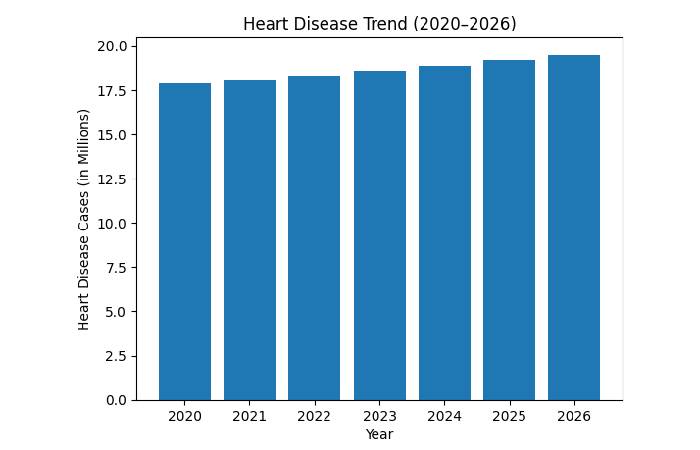
Heart Disease Trend (2020-2026)
How Is Heart Disease Diagnosed?
To Search if you have heart disease, your healthcare professional may: ask you about your medical history, including your symptoms. Moreover, ask you about your family medical history your family, including members of your family who have had heart disease, or they may order heart and blood tests.
Sometimes, your healthcare professional may refer you to a cardiologist specialist for testing, diagnosis, and maintenance.
Treatment OF Heart Disease
Here is a clear table showing heart disease treatment options:
| Treatment Type | Method | Purpose / Benefit |
| Lifestyle | Healthy diet | Drops cholesterol and blood heaviness |
| Lifestyle | Regular workout | Reinforces the heart muscle |
| Lifestyle | Quit smoking | Improves blood movement |
| Lifestyle | Weight control | Reduces heart strain |
| Lifestyle | Stress management | Drops heart workload |
| Medicines | Blood pressure medicines | Controls hypertension |
| Medicines | Cholesterol-lowering drugs (Statins) | Prevents artery blockage |
| Medicines | Blood thinners | Decreases clot formation |
| Medicines | Beta-blockers | Slows heart rate and reduces stress |
| Medicines | Diuretics | Removes excess fluid |
| Actions | Angioplasty | Opens blocked arteries |
| Procedures | Stent placement | Keeps arteries open |
| Surgery | Bypass surgery | Improves blood flow |
| Surgery | Valve repair/replacement | Fixes damaged valves |
| Devices | Pacemaker | Controls heartbeat |
| Devices | Defibrillator (ICD) | Prevents sudden cardiac arrest |
| Rehabilitation | Cardiac rehab | Recovers retrieval and fitness |
| Monitoring | Regular checkups | Tracks heart health |
What Are The Treatments For Heart Disease?
It is a treatment plans depend on your type, Furthermore, severity of your symptoms, and any other medical conditions you may have. Possible treatments include:
- Heart-healthy lifestyle changes
- Medications
- Cardiac rehabilitation
- Procedures or surgery.
Test of Heart Disease
Here is a clear table showing standard tests for heart disease:
| Test Category | Test Name | Purpose / What It Shows |
| Blood Tests | Lipid profile | Events cholesterol levels |
| Blood Tests | Blood sugar (HbA1c) | Checks diabetes risk |
| Blood Tests | Cardiac enzymes (Troponin) | Detects a heart attack |
| Electrical Tests | ECG (Electrocardiogram) | Records the heart’s electric action |
| Electrical Tests | Holter monitor | Monitors heart beat for 24–48 hours |
| Imaging Tests | Echocardiogram | Demonstrations of heart structure and driving power |
| Imaging Tests | Chest X-ray | Checks heart size and lungs |
| Stress Tests | Treadmill test (TMT) | Evaluates the heart under physical stress |
| Stress Tests | Atomic stress test | Measures blood flow to the heart muscle |
| CT/MRI | CT coronary angiography | Detects blocked veins |
| CT/MRI | Cardiac MRI | Detailed heart imaging |
| Invasive Tests | Coronary angiography | Finds exact artery obstructions |
| Vascular Tests | Ankle-Brachial Directory (ABI) | Checks blood flow in the legs |
| Hereditary Tests | Genetic transmission | Classifies congenital heart risks |
Regional for Heart Disease
Here is a clear table showing the regional distribution of heart disease worldwide:
| Region | Prevalence Level | Main Causes | Key Risk Factors |
| North America | High | Coronary thrombosis, atherosclerotic artery disease, and obesity | Poor diet, smoking, and idleness |
| Europe | High | Heart attacks, hypertension | High-fat, aging population |
| Asia | Reasonable to High | Stroke, coronary thrombosis disease | Diabetes, smoking, and urban lifestyle |
| South Asia (India, Pakistan, etc.) | Very High | Early heart attacks, CAD | Stress, diabetes, genetic risk |
| Africa | Rising | Hypertension, heart failure | Limited healthcare, poor awareness |
| Middle East | High | Heart disease, obesity | Sedentary lifestyle, diabetes |
| South America | Reasonable | Coronary disease, stroke | Smoke, poor diet |
| Australia & Oceania | Moderate | Heart attacks, high blood pressure | Obesity, inactive lifestyle |
| East Asia (China, Japan, Korea) | Moderate | Stroke, heart disease | High salt intake, smoking |
| Rural Regions | Cumulative | Raw heart circumstances | Lack of medical amenities |
Risk Factors of Heart Disease
Here is a clear table showing the risk factors of heart disease:
| Category | Risk Factor | Description / Impact |
| Lifestyle | Smoking | Damages blood vessels and raises blood pressure |
| Lifestyle | Unhealthy diet | Increases cholesterol and obesity |
| Lifestyle | Physical inactivity | Weakens the heart and circulation |
| Lifestyle | Excess alcohol | Raises blood pressure and heart rate |
| Lifestyle | Stress | Triggers high BP and heart strain |
| Medical | High blood pressure | Strains the heart and damages the arteries |
| Medical | High cholesterol | Causes artery blockage |
| Medical | Diabetes | Increases risk of heart attacks |
| Medical | Obesity | Adds pressure on the heart |
| Medical | Sleep apnea | Decreases oxygen supply to the heart |
| Genetic | Family history | Inherited heart disease risk |
| Genetic | Age | Risk increases after 40–45 years |
| Hereditary | Gender | Advanced risk in men (earlier age) |
| Environmental | Air contamination | Increases heart inflammation |
| Behavioral | Poor sleep | Affects heart rhythm and BP |
| Metabolic | Metabolic syndrome | A combination of BP, sugar, and heaviness problems |
| Social | Sedentary lifestyle | Long sitting hours harm heart health |
Can Heart Disease Be Prevented
You can reduce your risk of certain heart conditions by making heart-healthy lifestyle changes and managing any other health conditions you have.
Conclusion
Cardiovascular disease symptoms can be different in men and women, including chest pain (angina), shortness of breath, numbness, weakness. Moreover, feeling cold in the legs or arms as they narrow blood vessels in certain parts of the body. Some risk factors for developing heart disease include age, gender, family history, smoking, poor diet, lack of exercise, alcohol consumption, high blood pressure, diabetes, and obesity. High blood pressure and coronary heart disease are common causes of heart failure. High blood pressure is a cardiovascular disease that can help with other problems such as heart attack, heart failure, and stroke.
FAQs
What is the most common symptom of heart disease?
Chest pain or uneasiness is the most common symptom.
Can heart disease cause shortness of breath?
Yes, it often causes trouble breathing, especially during action.
Are heart disease symptoms different in women?
Yes, women may experience jaw pain, fatigue, nausea, or back pain.
Is fatigue a sign of heart disease?
Yes, unusual or constant weariness can be a cautionary sign.
Can heart illness cause dizziness?
Yes, poor blood flow can lead to dizziness or collapse.
Does heart disease always cause chest pain?
No, some people have no or only mild chest pain.
When must I see a doctor?
See a doctor if you have ongoing chest discomfort, breathlessness, or tremors.
Can indigestion be related to heart disease?
Yes, heart-related pain can occasionally feel like indigestion.
Is swelling in the legs linked to heart disease?
Yes, it may indicate heart failure or circulatory issues.
Can stress gun trigger heart indications?
Yes, stress can deteriorate heart-related conditions.