

We are dedicated to providing reliable, easy-to-understand information on health, wellness, and daily care topics to help people live healthier lives. Our goal is to simplify complex information into practical tips, guides, and capitals that anyone can follow.
Our content focuses on promoting healthy habits, improving lifestyle choices, and spreading awareness about personal care and well-being. We strive to deliver accurate, reader-friendly, and useful information that supports better everyday living.
What is Brushing?
Brushing is the process of cleaning the teeth with a toothbrush and toothpaste to remove plaque, food particles, and bacteria. It is an essential daily oral hygiene habit that helps prevent cavities, gum disease, and bad breath while keeping teeth and gums healthy.
How to Keep Your Teeth Clean?
Keeping your teeth clean means maintaining proper oral hygiene habits to remove plaque, bacteria, and food particles from the teeth and gums. It involves regular brushing, flossing, rinsing, and healthy eating practices to prevent cavities, gum disease, and bad breath, while maintaining strong, healthy teeth.
Why do you Have to Brush your Teeth?
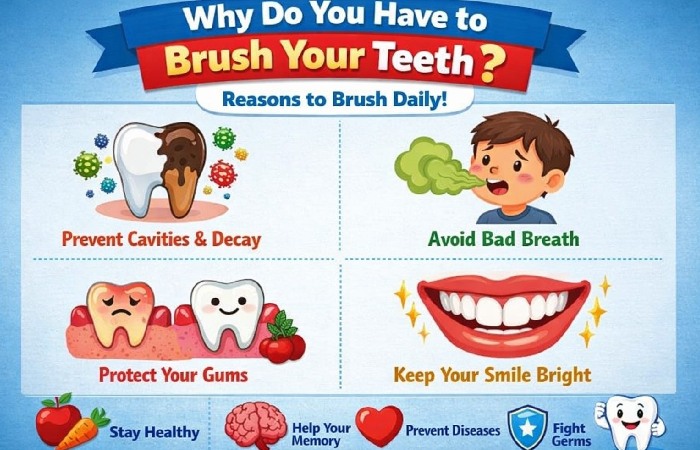
Brushing your teeth is necessary to remove plaque, bacteria, and food particles that accumulate on your teeth and gums every day. Regular brushing prevents cavities, gum disease, and bad breath while keeping the mouth clean, healthy, and fresh.
Best Time to Brush Your Teeth for Maximum Protection
| Time | Why It Matters | Protection Benefits |
| Early Morning (After Waking Up) | Bacteria build up overnight due to reduced saliva flow. | Removes plaque, freshens breath, and protects enamel |
| Before Bed (Night Brushing) | Food particles and bacteria accumulate throughout the day. | Prevents cavities, gum disease, and overnight bacterial growth |
| After Meals (Wait 30 Minutes) | Acids in food and drinks temporarily soften enamel. | Brushing after a gap protects enamel and removes food debris |
| After Sugary Foods & Drinks | Sugar feeds harmful bacteria that produce acids. | Reduces the risk of tooth decay and plaque formation |
| After Consuming Staining Drinks | Tea, coffee, and soft drinks can stain teeth. | Helps maintain natural tooth color and oral freshness |
| Before Important Events | Ensures mouth cleanliness and fresh breath. | Boosts confidence and social comfort |
Hidden Reason Your Breath Smells Bad (Even After Brushing)
Brushing your teeth twice a day is a great habit, but if you still find yourself dealing with bad breath, it can be frustrating and embarrassing. Many people assume that brushing alone is enough to maintain fresh breath, but the reality is that bad breath—also known as halitosis—often has deeper causes.
While poor oral hygiene is a common culprit, persistent bad breath could indicate an issue beyond just your teeth. Problems like dry mouth, gum disease, or even digestive issues can play a role. If you’ve tried everything but still struggle with bad breath, it may be time to visit a Dentist Forrestfield to determine if an underlying dental or health condition is to blame.
Here’s a closer look at some of the hidden reasons your breath might smell bad—even after brushing—and what you can do to fix it.
1. You’re Neglecting Your Tongue
Your tongue can harbor a significant amount of bacteria, food particles, and dead cells, all of which contribute to bad breath. The rough surface of your tongue provides the perfect environment for odor-causing bacteria to thrive, leading to persistent bad breath even if your teeth are clean.
2. You Have Dry Mouth (Xerostomia)
Saliva plays a crucial role in washing away bacteria and food particles in your mouth. When your mouth is dry, bacteria multiply faster, leading to stronger odors. Dry mouth can be caused by dehydration, certain medications, or even sleeping with your mouth open.
3. Gum Disease and Hidden Plaque Buildup
Gum disease, also known as periodontal disease, is a major cause of bad breath. When bacteria build up under the gum line, they release foul-smelling gases that brushing alone won’t eliminate. If your gums are inflamed, bleed when you brush, or recede from your teeth, you could have early signs of gum disease.
4. Your Diet Is Contributing to Bad Breath
Certain foods can cause long-lasting bad breath, even after brushing. Garlic, onions, and spicy foods contain sulfur compounds that linger in your mouth and bloodstream, leading to unpleasant odors that persist for hours.
5. You Might Have an Underlying Medical Condition
If you’ve addressed all possible oral hygiene concerns and still struggle with bad breath, it may be a sign of an underlying health issue. Conditions such as acid reflux, sinus infections, diabetes, or digestive disorders can contribute to chronic halitosis.
Fresh Breath Starts with a Healthy Mouth
Bad breath isn’t just about brushing it’s about a full approach to oral health and overall well-being. By addressing hidden causes like tongue bacteria, dry mouth, gum disease, and dietary factors, you can significantly improve your breath and boost your confidence. If persistent bad breath continues despite your best efforts, consulting a dentist can help you get to the root of the issue and find an effective solution.
Step-by-Step Guide to Proper Tooth Brushing
Definition: Proper tooth brushing is a daily oral care practice that removes plaque, bacteria, and food particles from teeth and gums. It helps maintain strong teeth and healthy gums, and prevents cavities and bad breath.
| Step | Action | Purpose |
| 1 | Choose a soft-bristled toothbrush and fluoride toothpaste | Protects enamel and cleans teeth gently |
| 2 | Wet the toothbrush and apply a pea-sized amount of toothpaste | Ensures safe and effective cleaning |
| 3 | Hold the brush at a 45-degree angle to the gums | Cleans the gum line where plaque builds up |
| 4 | Brush gently in small circular motions | Removes plaque without damaging enamel |
| 5 | Clean outer surfaces of upper and lower teeth | Removes food particles and bacteria |
| 6 | Brush inner surfaces carefully | Prevents tartar build-up in hidden areas |
| 7 | Clean chewing surfaces with back-and-forth strokes | Removes trapped food debris |
| 8 | Brush your tongue gently | Removes odor-causing bacteria and freshens breath |
| 9 | Rinse mouth thoroughly with water | Washes away loosened plaque and toothpaste |
| 10 | Rinse the toothbrush and store it upright to dry | Prevents bacterial growth on the brush |
Choosing the Right Toothbrush and Toothpaste
Choosing the right toothbrush and toothpaste is essential for maintaining good oral hygiene, preventing dental problems, and ensuring effective cleaning without damaging teeth or gums.
Toothbrush Selection Tips
Soft Bristles Are Best
Soft-bristled toothbrushes clean teeth effectively while being gentle on gums and enamel.
Choose the Right Head Size
A small or medium brush head helps reach back teeth and clean difficult areas comfortably.
Comfortable Handle Grip
A non-slip and easy-to-hold handle provides better control while brushing.
Manual vs Electric Toothbrush
Electric toothbrushes help remove plaque more effectively, while manual brushes are affordable and travel-friendly.
Replace Regularly
Toothbrushes should be replaced every 3–4 months or when bristles become frayed.
Toothpaste Selection Tips
Fluoride Toothpaste for Strong Teeth
Fluoride strengthens enamel and helps prevent cavities.
For Sensitive Teeth
Desensitizing toothpaste reduces pain caused by hot, cold, or sweet foods.
Whitening Toothpaste
Helps remove surface stains and improves tooth brightness.
Herbal & Natural Toothpaste
Made with plant-based ingredients for people who prefer chemical-free oral care.
Tartar Control Toothpaste
Prevents plaque from hardening into tartar and reduces the risk of gum problems.
Benefits of Night Brushing Before Bed
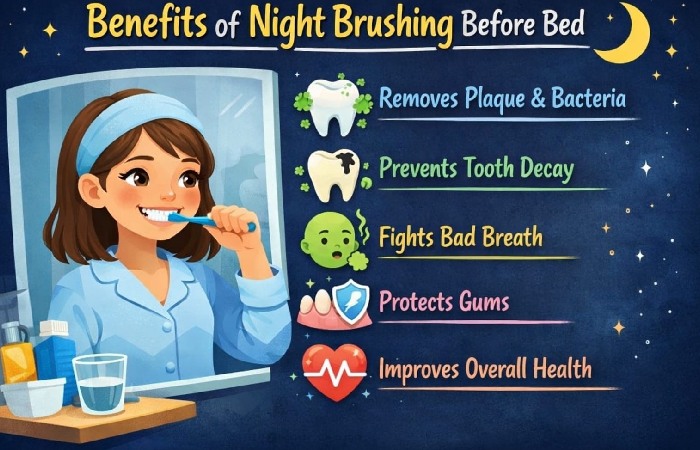
Night brushing is the habit of cleaning your teeth before sleeping to remove plaque and food particles collected throughout the day. It protects teeth and gums overnight when saliva production is low and bacterial activity increases.
| Benefit | Explanation | Oral Health Advantage |
| Removes Day-Long Plaque | Cleans plaque and bacteria formed during the day | Reduces risk of cavities |
| Prevents Gum Disease | Removes harmful bacteria near the gum line | Keeps gums healthy and strong |
| Fights Bad Breath | Eliminates trapped food particles and odor-causing germs | Keeps breath fresh in the morning |
| Protects Tooth Enamel | Fluoride from toothpaste strengthens enamel overnight | Prevents tooth sensitivity and decay |
| Reduces Tartar Formation | Stops plaque from hardening while you sleep | Prevents staining and gum issues |
| Promotes Overall Oral Hygiene | Keeps the mouth clean for several hours | Lowers the risk of dental infections |
| Supports Healthy Smile | Maintains cleanliness and tooth appearance | Improves confidence and dental health |
Tips for Better Toothbrushing
Better toothbrushing means using the correct techniques and tools to clean teeth effectively, remove plaque, and maintain healthy gums for long-term oral hygiene.
Use a Soft-Bristled Toothbrush
Soft bristles clean teeth gently without damaging enamel or irritating gums.
Brush for Two Minutes
Brushing for at least 2 minutes ensures all tooth surfaces are properly cleaned.
Hold the Brush at the Right Angle
Keeping the toothbrush at a 45-degree angle helps clean the gum line effectively.
Use Gentle Circular Motions
Small circular strokes remove plaque better than harsh back-and-forth brushing.
Don’t Forget the Tongue
Cleaning the tongue removes odor-causing bacteria and keeps breath fresh.
Brush Twice Daily
Brushing in the morning and before bed protects teeth from plaque buildup.
Use the Right Amount of Toothpaste
A pea-sized amount of fluoride toothpaste is enough for effective cleaning.
Replace Your Toothbrush Regularly
Change your toothbrush every 3–4 months, or when the bristles become worn.
Rinse Properly After Brushing
Rinsing thoroughly helps wash away loosened food particles and bacteria.
Natural Ways to Keep Teeth Clean Along with Brushing
Natural methods for keeping teeth clean involve using safe, home-based practices that support regular brushing by reducing bacteria, removing stains, and improving overall oral hygiene.
| Natural Method | How It Helps | Oral Care Benefit |
| Rinsing with Warm Salt Water | Salt has natural antibacterial properties that reduce germs | Prevents gum infections and soothes inflammation |
| Oil Pulling | Swishing coconut or sesame oil helps remove bacteria and plaque | Improves gum health and reduces bad breath |
| Eating Crunchy Fruits & Vegetables | Apples, carrots, and cucumbers help scrub teeth naturally | Removes food particles and stimulates saliva |
| Drinking Plenty of Water | Water washes away food debris and acids | Prevents plaque build-up and tooth decay |
| Using Baking Soda Occasionally | Mild abrasive that helps remove surface stains | Makes teeth cleaner and brighter |
| Chewing Sugar-Free Gum | Increases saliva production that neutralizes acids | Reduces cavities and freshens breath |
| Clove or Neem Sticks | Traditional natural cleaners with antibacterial properties | Strengthens gums and reduces harmful bacteria |
| Green Tea Consumption | Contains antioxidants that fight bacteria growth | Promotes healthy gums and fresh breath |
What Type of Toothpaste Should I Use?
The right toothpaste helps clean teeth effectively, protect enamel, and address specific oral problems like sensitivity, cavities, stains, or gum issues.
Fluoride Toothpaste
Fluoride strengthens tooth enamel and protects against cavities, making it ideal for daily use.
Toothpaste for Sensitive Teeth
Specially formulated to reduce pain caused by hot, cold, or sweet foods and drinks.
Whitening Toothpaste
Contains mild abrasives and polishing agents that help remove surface stains and brighten teeth.
Herbal or Natural Toothpaste
Made from plant-based ingredients and suitable for people who prefer chemical-free oral care.
Tartar Control Toothpaste
Helps prevent plaque from hardening into tartar and reduces the risk of gum-related problems.
Children’s Toothpaste
Designed with mild ingredients and lower fluoride levels that are safe for kids’ teeth.
If you want, I can also create a toothpaste comparison table, a list of the best toothpaste brands, or dentist recommendations.
Importance of Brushing for Daily Oral Hygiene
| Aspect | Why It Is Important | Benefits |
| Plaque Removal | Brushing removes sticky plaque formed by bacteria on teeth. | Prevents cavities and tooth decay |
| Prevents Gum Disease | Helps remove bacteria along the gum line. | Reduces the risk of gingivitis and bleeding gums |
| Freshens Breath | Eliminates food particles and odor-causing bacteria. | Keeps breath fresh and clean |
| Prevents Tartar Build-up | Regular brushing stops plaque from hardening into tartar. | Avoids staining and gum problems |
| Protects Enamel | Fluoride toothpaste strengthens tooth enamel. | Reduces sensitivity and tooth damage |
| Improves Overall Oral Health | Keeps teeth, gums, and mouth clean. | Lowers the risk of infections and dental treatments |
| Saves Dental Costs | Prevents major dental issues through daily care. | Reduces the need for expensive procedures |
| Boosts Confidence | Clean teeth improve appearance and smile. | Enhances self-esteem and social comfort |
Role of Brushing in Preventing Bad Breath
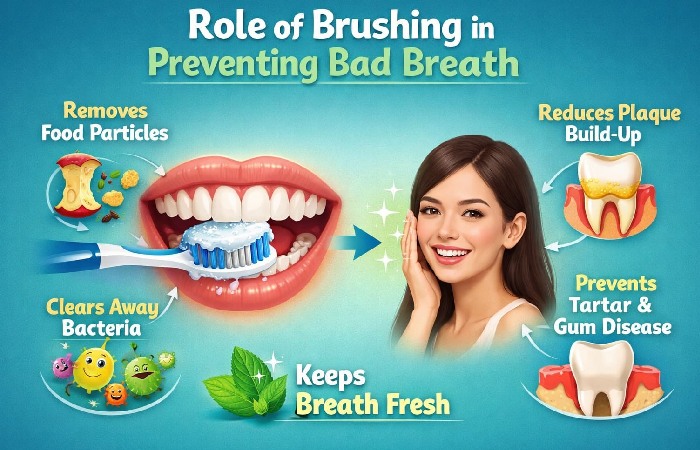
Brushing plays a vital role in preventing bad breath by removing food particles, plaque, and odor-causing bacteria from the teeth, tongue, and gums. Regular brushing keeps the mouth clean and maintains long-lasting freshness.
| Role of Brushing | How It Helps | Breath Benefit |
| Removes Food Particles | Cleans trapped food between teeth that causes odor | Prevents unpleasant smell |
| Reduces Bacterial Growth | Brushing removes bacteria that produce foul-smelling gases | Keeps breath fresh longer |
| Cleans the Tongue | Removes odor-causing bacteria settled on the tongue surface | Improves overall mouth freshness |
| Prevents Plaque Build-up | Stops plaque accumulation that leads to gum infections | Reduces bad breath from gum disease |
| Protects Gum Health | Healthy gums prevent bacterial infection and decay smell | Maintains natural breath freshness |
| Stimulates Saliva Production | Brushing helps maintain saliva flow that washes bacteria | Prevents dry mouth odor |
| Removes Morning Breath Causes | Eliminates bacteria formed overnight | Keeps breath fresh after waking |
Prices of Brushing Essentials in India, the UK, the USA, and London
This table shows approximate retail prices for common toothbrushing items (toothbrush and toothpaste) in India, the United Kingdom (UK), the United States (USA), and London (UK). Prices vary by brand, quality, and store.
| Item | India (INR) | UK (GBP) | London (GBP) | USA (USD) |
| Basic Manual Toothbrush | ₹50–₹150 | £1.50–£3 | £1.50–£3 | $1–$3 |
| Soft-Bristle Toothbrush (Mid-Range) | ₹100–₹300 | £3–£6 | £3–£6 | $3–$6 |
| Electric Toothbrush (Basic) | ₹800–₹2,000 | £20–£40 | £20–£40 | $20–$50 |
| Electric Toothbrush (Advanced) | ₹2,000–₹8,000 | £40–£120 | £40–£120 | $50–$200 |
| Standard Fluoride Toothpaste (100–150g) | ₹50–₹150 | £1.50–£3 | £1.50–£3 | $2–$5 |
| Whitening Toothpaste | ₹80–₹250 | £2–£5 | £2–£5 | $3–$7 |
| Sensitive Teeth Toothpaste | ₹100–₹300 | £3–£6 | £3–£6 | $4–$8 |
How Brushing Prevents Cavities and Gum Disease?
Brushing prevents cavities and gum disease by removing plaque, bacteria, and food particles that accumulate on teeth and along the gum line. Regular brushing keeps the mouth clean, strengthens enamel, and protects gums from infection.
Removes Plaque Build-Up
Brushing clears sticky plaque that contains harmful bacteria responsible for tooth decay.
Prevents Acid Attacks on Enamel
Bacteria in plaque produce acids that damage enamel; brushing removes these bacteria and protects teeth.
Cleans the Gum Line
Proper brushing removes trapped debris near the gums, reducing the risk of gum infections.
Reduces Bacterial Growth
Daily brushing helps control the growth of harmful bacteria in the mouth.
Strengthens Tooth Enamel
Fluoride toothpaste used while brushing helps harden enamel and makes teeth more cavity-resistant.
Prevents Tartar Formation
Brushing removes plaque before it hardens into tartar, which can lead to gum disease.
Protects Gums from Inflammation
Clean gums are less likely to swell, bleed, or develop gingivitis.
Maintains Overall Oral Hygiene
Regular brushing helps keep teeth and gums healthy, reducing the risk of serious dental problems.
Brushing Tips for Kids and Beginners
Brushing is an essential daily habit that helps keep teeth clean, strong, and cavity-free. For kids and beginners, learning the correct brushing techniques early makes oral care easier and more effective. Using the right tools and simple methods ensures healthy teeth and good dental habits for life.
| Tip | Description | Benefit |
| Use a Soft-Bristled Toothbrush | Choose a small, soft brush suitable for kids’ mouths | Gentle on gums and enamel |
| Use a Pea-Sized Toothpaste | A small amount of fluoride toothpaste is enough | Safe and effective cleaning |
| Brush Twice a Day | Brush once in the morning and before bedtime | Prevents plaque and cavities |
| Brush for Two Minutes | Spend enough time cleaning all teeth properly | Ensures complete mouth cleaning |
| Use Gentle Circular Motions | Avoid hard scrubbing to protect gums | Prevents gum damage and pain |
| Clean the Tongue | Gently brush the tongue surface | Removes bacteria and bad breath |
| Rinse Properly After Brushing | Wash away leftover toothpaste and debris | Keeps the mouth fresh and clean |
| Ask Parents for Supervision | Adults can guide young children while brushing | Ensures correct brushing technique |
| Replace Toothbrush Regularly | Change brush every 3–4 months | Maintains effective cleaning |
Conclusion
Maintaining proper oral hygiene starts with consistent, proper brushing habits. Consistent brushing, along with healthy dental care practices, helps prevent cavities, gum disease, and bad breath while keeping your teeth strong and clean. Taking small daily steps ensures long-term oral health and a confident, healthy smile.